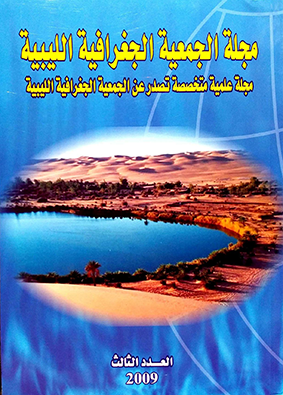
Strategies for sustainable desert tourism development in Libya
Strategies for sustainable desert tourism development in Libya
DOI:
https://doi.org/10.5281/zenodo.18394085Keywords:
Tourism sector, Tourism revenues, International returnsAbstract
The tourism sector is one of the most important economic sectors that directly influences the economies of many countries in our contemporary world, as its revenues have become one of the important sources of national income, and one of the sources of hard currency that support the balance of payments.This sector is a driving force behind the economic and social development programs of these countries, particularly developing ones. It also contributes to providing a wide range of diverse employment opportunities. International statistics in the tourism sector indicate a growing number of tourists, having jumped from approximately 25 million in 1950.
It reached approximately 700 million tourists in 2002. It is projected to reach approximately 1.6 billion tourists by 2020, while international revenues increased from $2.1 billion in 1950 to approximately $500 billion in 2002.
References
1- Bramwell, B. and Lane, B., (1993), Sustainable Tourism: An Evolving Global Approach, Journal of Sustainable tourism, ol.1 no.1.
2- Barnett T., (2006), The Libyan Desert: Natural Resources and Cultural Heritage., London: The Society for Libyan Studies,.
3-Cooper, C., Fletcher, J., Gilbert, D., and Wanhill, S., (1993), Tourism Principles and Practice., Essex: Longman.
4-Hunter, C. J., (1995), On The Need to Re-conceptualize Sustainable Tourism Development., Journal of Sustainable Tourism, vol. 13 no.3.
5-Inskeep, E., (1991), Planning Tourism: An Integrated and Sustainable Development Approach., New York: Van Nostrand Reinhold.
6-loannides, D., and Delobage, K.G., (1998), The Economic Geography of Tourist Industry, London: Rutledge.
7-Keenan, J., (2006), The Libyan Desert: Natural Resources and Cultural Heritage., London: The Society for Libyan Studjes, pp.241-259.
8- Mathieson, A., and Wali, G., (1982), Tourism Economic, physical and Social Impacts., New York: Longman.
9-Page S.J., and Thorn, K.J., (1997), Towards Sustainable Tourism Planning in New Zealand Public Sector Planning Responses., Journal of Sustainable Tourism, vol.5 no.1.
10-Pigram, J., (1993), Alternative Tourism Tourism and Resource Management, University of Pennsylvania Press.
11-Poon, A., (1993), Tourism Technology and Competitive strategies Trowbridge: Redwood Books.
12-Timothy, D.J., (1998), Cooperative Tourism Planning in Developing Destination, Journal of Sustainable tourism, vol. 6 no.1.